|
|
|
|
|
|
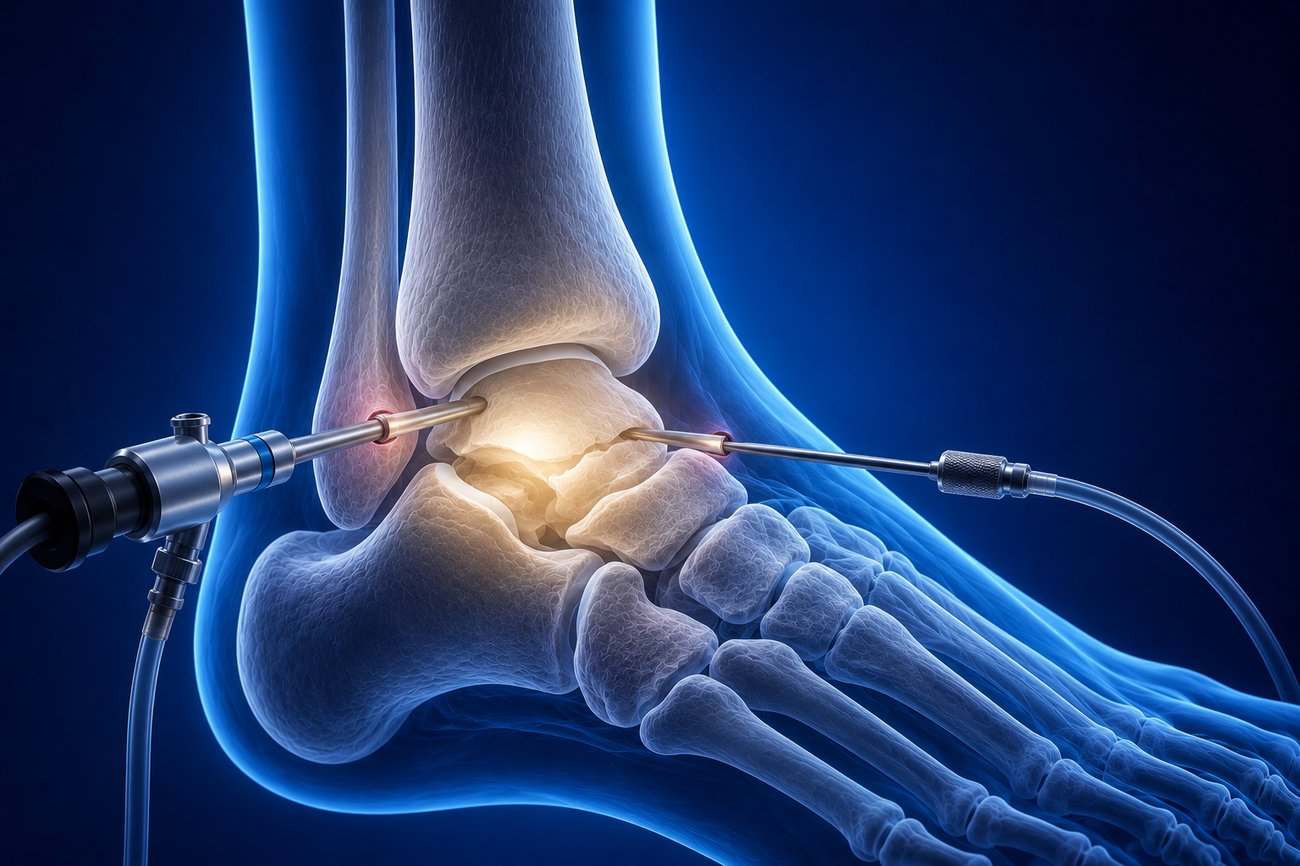
Randomized trial suggests that inferior extensor retinaculum reinforcement may not provide additional benefit when arthroscopic lateral ligament complex repair is performed.
|
|
Surgical intervention for chronic ankle instability has demonstrated promising outcomes.
But whether or not the inferior extensor retinaculum reinforcement in arthroscopic lateral ligament complex repair is necessary is still debated. This randomized trial of 59 patients aimed to find out.
Among those who received arthroscopic anterior talofibular ligament repair, those who received inferior extensor retinaculum reinforcement:
Showed no benefits over those who didn't in all clinical outcomes.
Demonstrated comparable re-tear rates.
Had similar complication profiles.
The outcomes are similar regardless of IER reinforcement. It's a result that draws into question the practice altogether.
|
|
|
Full Analysis →
|
|
|
|
|
|
|
|
|
|
|
New research suggests that patients on antidepressants during TJA may be more likely to be prescribed, abuse opioids.
|
|
“There are some populations that have higher susceptibility to become [opioid] abusers,” says Alireza Mirahmadi, postdoctoral fellow in orthopedic surgery at Beth Israel Deaconess Medical Center.
We should be tailoring our pain management strategies accordingly. But what populations are at risk?
According to a recent retrospective study of over 150,000 patients who underwent a total joint arthroplasty in the last 20 years, antidepressants could be a risk factor.
Patients who were on antidepressants were more likely to abuse opioids, as well as have systemic complications and implant failures.
“This is not a guideline. We cannot just rely on one paper,” Mirahmadi said. “But for these specific patients, we are more cautious about opioid prescription, and we are looking into whether it is possible to use multimodal pain management to reduce the opioid prescription in this group.”
|
|
|
Read the Article →
|
|
|
|
|
|
|
|
|

|
This conversation with Dr. Erika Taylor explores how health equity, leadership, and system design intersect in modern musculoskeletal care.
Through discussions of value-based care, service-line integration, workforce retention, and inclusive decision-making, the episode reframes culture as a measurable driver of quality, sustainability, and clinical excellence.
|
Watch Now →
|
|
|
|
Effect of Photobiomodulation on Pain Relief and Functional Improvement in Fractures — In adults with fractures, does photobiomodulation result in improved pain scores, pain-related disability, grip strength, mandibular opening, bone healing, nocturnal pain, analgesic use, and safety when compared with placebo, sham laser, conventional therapy, or acupuncture?
(Read)
(Read)
(Read)
(Read)
(Read)
(Read)
(Read) (Read)
|
|
|
Do Patients Benefit From a Home Exercise Program With or Without Functional Electromyostimulation Initiated 1 Year After Reverse Shoulder Arthroplasty? —In patients who underwent reverse TSA at least one year earlier, does a 6 week home exercise program augmented with functional electromyostimulation improve shoulder function compared with the same home exercise program without active
functional electromyostimulation?
(Read)
(Read)
(Read)
(Read)
(Read)
(Read)
(Read) (Read)
|
|
|
Antibiotic Duration in Native and Periprosthetic Joint Infections — In patients with native septic arthritis or PJI, does short-course antibiotic therapy compared with long-course antibiotic therapy result in similar rates of treatment success, complications, and mortality following surgical management?
(Read)
(Read)
(Read)
(Read)
(Read)
(Read)
(Read) (Read)
|
|
|
Two ways to inform your clinical decisions |
FastTrack — what your peers are reading across the networkOE Signal — personalized weekly evidence based on your interests |
|
|
|
|