|
|
|
|
|
|
Meta-analyses of 7 studies finds little clinically relevant differences between the two procedures.
|

|
Distal humerus fractures can be tricky to treat -- particularly in the elderly.
Most physicians opt for one of two surgical procedures: the open reduction and internal fixation, or the total elbow arthroplasty.
Both procedures have their strengths and weaknesses, but are there meaningful differences between the two?
According to this systematic review and meta-analyses:
There's no difference in operative time.
No difference in length of stay.
Slightly better range of motion with internal fixation that may not even be clinically significant.
Comparable complication profiles.
The results suggest it comes more down to individual patients -- frailty, functional needs, and fracture complexity.
|
|
|
Full Analysis →
|
|
|
|
|
|
|
|
|
|
|
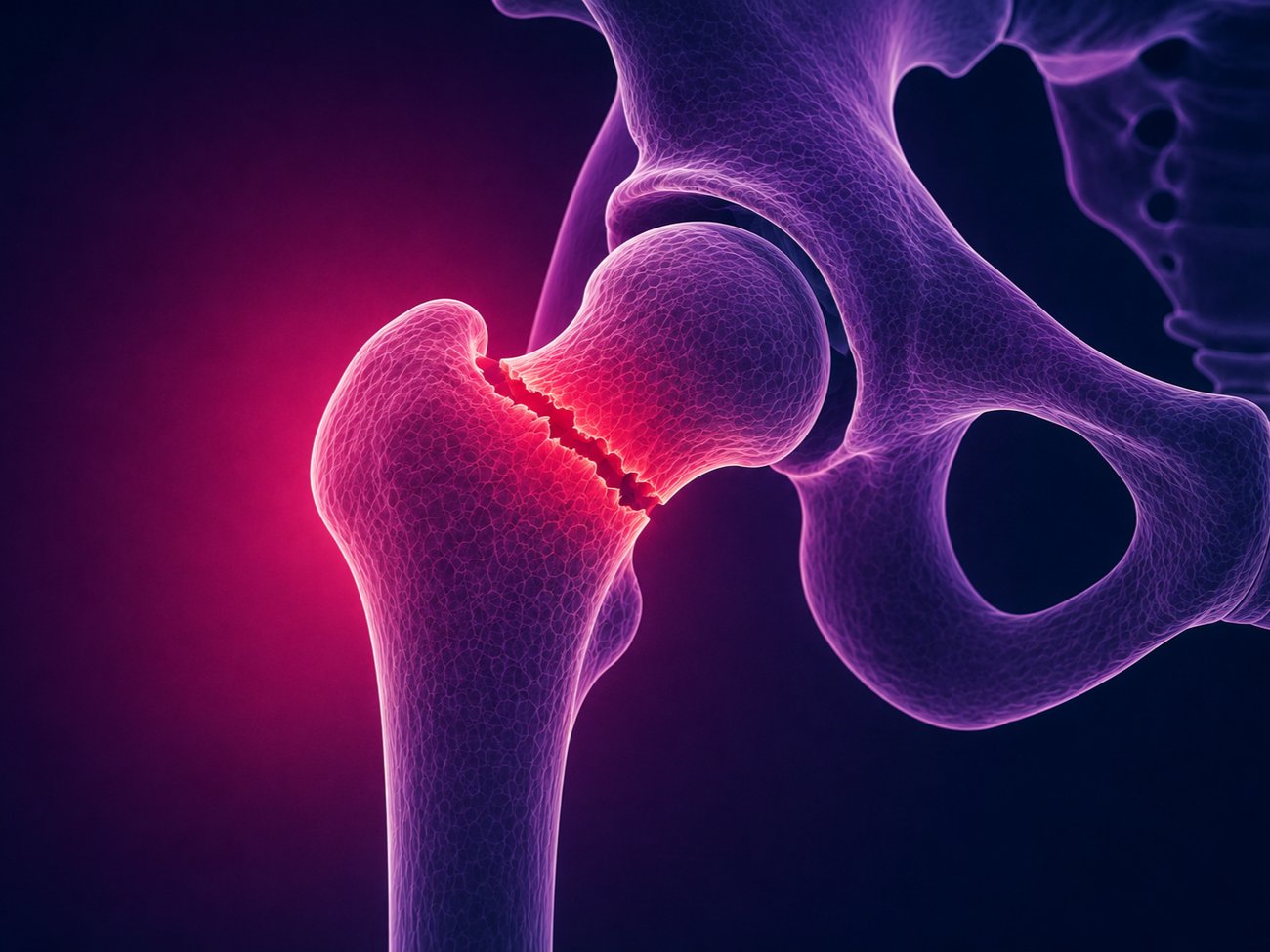
Both fracture and patient factors should be evaluated to determine the best treatment for femoral neck fractures.
|
|
There are hundreds of thousands of femoral neck fractures around the world each year.
Many pose the same question: do we fixate the fracture, or do we replace the hip?
Dr. Tracy Watson notes that "not all fractures a created equal", as bone quality, especially in older individuals, can make adequate fixation difficult.
So what's the best option for each patient scenario?
|
|
|
Read the Article →
|
|
|
|
|
|
|
|
|

|
In athletes, we focus a lot on getting injured players back on the pitch -- even if it requires surgery, and even if it costs a little more.
But that type of reasoning is often not applied to the average humeral shaft fracture patient.
In this episode of the OrthoJoe podcast, Mo & Marc sit down with Dr Bradley Petrisor, surgeon and professor at McMaster University, about a recent cost-effectiveness analyses which found that surgery can accelerate recovery, return to work, and early function, making it more cost-effective from a societal perspective.
|
Watch Now →
|
|
|
|
Effect of Kinesthetic and Visual Motor Imagery with Biofeedback on Cervical Position Sense and Balance in Patients with Mechanical Neck Pain — In adults with chronic mechanical neck pain, does adding kinesthetic and visual motor imagery training with biofeedback to conventional physical therapy improve cervical proprioception, neck-related disability, balance, and pain compared with conventional physical therapy alone?
(Read)
(Read)
(Read)
(Read)
(Read)
(Read)
(Read) (Read)
|
|
|
Open Broström vs Arthroscopic Broström versus Lasso-Loop Repair —In patients with chronic lateral ankle instability requiring anterior talofibular ligament repair, do arthroscopic Broström or lasso-loop repair improve pain, ankle function, return to activity, and complications compared with open Broström repair?
(Read)
(Read)
(Read)
(Read)
(Read)
(Read)
(Read) (Read)
|
|
|
Direct Anterior Approach for Total Hip Arthroplasty with Patients in the Lateral Decubitus vs Supine Position — In adults undergoing primary THA through the direct anterior approach, does lateral decubitus positioning result in different functional outcomes, component positioning, leg-length restoration, operative efficiency, and hospital stay compared with supine positioning?
(Read)
(Read)
(Read)
(Read)
(Read)
(Read)
(Read) (Read)
|
|
|
Two ways to inform your clinical decisions |
FastTrack — what your peers are reading across the networkOE Signal — personalized weekly evidence based on your interests |
|
|
|
|